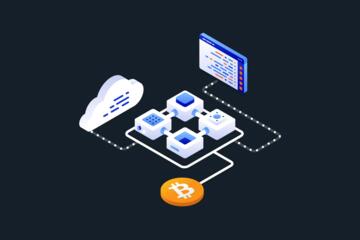
How Trades Move Through An Exchange
An exchange is a regulated marketplace that coordinates three separate functions: trading (matching orders), clearing (confirming obligations), and settlement (moving ownership and funds). When you place an order, the exchange does not “send it to someone” in the human sense; it routes instructions into a matching system that compares your order against other orders already resting on the order book. After a match, the exchange’s post-trade partners calculate what each participant owes, then transfer assets through custody and payment rails. The exact architecture varies by venue, but the sequence—order entry, matching, clearing, settlement—stays consistent.
In many equity and derivatives markets, the exchange itself runs the trading venue while a clearinghouse becomes the central counterparty. That design reduces counterparty risk for day-to-day trading, because the clearinghouse stands between buyers and sellers for the cleared products. In crypto markets, some platforms combine trading and custody, while others route to separate clearing or settlement mechanisms; the details depend on the jurisdiction and the platform’s model. If you trade on a venue that offers “instant” execution, the matching step still happens first, and settlement still happens later, often on a different timeline.
Common Misunderstandings And Dependencies
People often assume that “execution” means “final settlement.” Execution usually means the matching engine found a counterparty and recorded a trade; settlement means the assets and cash actually move through the agreed post-trade process. Those two events can be separated by minutes, hours, or days depending on the instrument and market rules. Another frequent misunderstanding is that liquidity equals safety; liquidity describes how easily orders fill, while safety depends on clearing, custody, margining, and legal protections.
Behind the scenes, the exchange depends on several supporting technologies. The matching engine must enforce price-time priority, handle order types, and reject invalid instructions. Market data systems then broadcast trades and quotes, often with a delay that varies by feed and subscriber setup. Clearing systems require real-time risk checks, margin calculations, and position netting; they also manage corporate actions and contract specifications. Payment and custody rails—banking networks, depositories, and transfer agents—control how funds and securities move after the trade is confirmed.
Operational risk also matters. A venue can keep trading while experiencing a partial outage in data feeds, order routing, or settlement processing. When that happens, you may see stale quotes, delayed confirmations, or restricted withdrawals, even if the order book still updates. On some venues, you can observe this indirectly through changes in message rates or through the exchange’s published system status pages, which often include timestamps and affected components.
What To Check Before You Trade
Understand The Post-Trade Chain
Before placing meaningful orders, identify who clears and who settles the product you plan to trade. In many traditional markets, the clearinghouse is separate from the exchange, and it becomes the counterparty for cleared trades. For equities in the U.S., settlement commonly follows T+1 for many stocks and exchange-traded products, meaning settlement occurs one business day after trade date, though exact timelines can vary by instrument and corporate action. If a platform markets “instant settlement,” verify whether it refers to execution speed or to actual settlement finality.
Practical check: read the venue’s contract specifications and its “trade confirmation” and “settlement” documentation. Look for terms like “clearing member,” “central counterparty,” “settlement cycle,” and “custody.” If the venue uses a third-party custodian, confirm whether you hold assets in your own name or in a pooled omnibus account. That distinction affects how claims work if a firm fails, and it changes what you can recover and how quickly.
Map Fees To Real Costs
Exchanges publish fee schedules, but the total cost depends on more than the headline maker/taker rate. Trading costs can include exchange fees, clearing fees, regulatory fees, and routing or data fees charged by brokers or aggregators. A common trap is comparing only the execution fee while ignoring bid-ask spread and market impact, which can dominate for small accounts or during volatile periods.
Practical check: estimate your all-in cost using a simple scenario. If you place a limit order that fills at the mid price, your spread cost might be small; if you cross the spread with a market order, the spread cost becomes immediate. For derivatives, also account for funding or margin requirements, because leverage changes the economics even when the trade fee looks low. I often see people focus on a fee tier without checking whether their order type changes the effective fill price—especially when the order book is thin.
Use Order Types That Match The Mechanism
Order types exist because the matching engine treats them differently. A limit order rests on the book until it matches your price condition; a market order typically executes against available liquidity immediately and can move the execution price. Stop orders and stop-limit orders trigger based on last traded price or other reference prices, which can behave differently during gaps or fast markets. If you trade around scheduled events, the reference price used for triggering matters, and it can differ across venues.
Practical check: test order behavior with small sizes in a sandbox or paper-trading environment if the venue offers it. If you see an order status like “accepted,” “open,” “partially filled,” and “filled,” map those statuses to the exchange’s lifecycle definitions. On one venue I reviewed in 2024, the status labels matched the exchange’s FIX messages, but the user interface lagged by a few seconds—annoying when you rely on instant feedback.
Monitor Risk Controls And Limits
Exchanges and clearinghouses apply risk controls such as price bands, order throttles, and margin checks. These controls prevent extreme orders from destabilizing the market, but they can also block legitimate trades during volatility. For derivatives, margin requirements can change intraday, and clearing systems can force position reductions if margin falls below maintenance levels. For spot markets with custody, withdrawal limits and identity checks can restrict access even after execution.
Practical check: review the venue’s risk policy and the broker’s margin disclosures. Look for circuit breakers, maximum order sizes, and how the system handles “fat finger” errors. If you trade through a broker, confirm whether the broker routes orders directly to the exchange or through internalization; internalization can change where your order executes and how quickly you receive confirmations.
Educational Case Examples
Equity Order: Execution Vs Settlement
Scenario: A trader places a limit buy for 100 shares of a liquid stock through a broker at 10:15 a.m. The matching engine fills the order at 10:15:03 when a resting sell order meets the price. The broker shows “filled” immediately, but the cash and shares do not move to final settlement until the settlement cycle completes, commonly T+1 for many U.S. equities. During that gap, the trader’s account reflects the position, yet the underlying transfer is still pending in the settlement system. If a corporate action occurs before settlement, the post-trade processing may adjust entitlements based on the trade date and the market’s corporate action rules.
What to learn: “filled” reflects matching, while “settled” reflects final transfer. If you need to withdraw cash immediately after execution, you must check the broker’s available-to-withdraw rules, which can differ from the account’s settled balance.
Derivatives: Clearing And Margin Calls
Scenario: A small firm trades a listed futures contract. The exchange matches the order, and the clearinghouse becomes the counterparty for the cleared position. The clearing system calculates initial and maintenance margin based on risk parameters and the firm’s net positions. Later that day, volatility increases and margin requirements rise; the firm’s margin account may fall below maintenance. The clearinghouse and broker then issue a margin call, and the firm must add funds or reduce positions before the risk controls trigger forced actions.
What to learn: the exchange’s matching speed does not control your risk exposure. Clearing margining and risk limits determine whether you can hold the position through price moves.
Exchange Workflow Checklist
| Stage | What Happens | What You Can Observe | Where Failures Show Up |
|---|---|---|---|
| Order Entry | Your order is validated and routed to the venue | Accepted/open status, rejection reasons | Connectivity issues, invalid parameters |
| Matching | The matching engine pairs orders by rules | Trade prints, fill confirmations | Circuit breakers, halted trading |
| Clearing | Obligations are confirmed and margined | Position updates, margin requirements | Margin shortfalls, risk throttles |
| Settlement | Assets and cash transfer through custody rails | Settled balances, withdrawal availability | Settlement delays, custody holds |
Step-by-step checklist you can use before trading a new venue or product:
- Confirm the instrument type and the settlement cycle stated by the venue or clearinghouse.
- Identify the clearinghouse or clearing member model and whether the venue uses a central counterparty.
- Read the fee schedule and estimate all-in cost using a realistic order type (limit vs market).
- Check order lifecycle statuses and map them to execution vs settlement language in the documentation.
- Review risk controls: price bands, maximum order sizes, margin rules, and withdrawal restrictions.
- Verify data access: trade confirmations and market data feeds may lag, which affects monitoring.
Common Mistakes That Reduce Trust
People often blame the exchange for outcomes that come from the broker layer. A broker can internalize orders, apply its own risk checks, or delay confirmations to the client. Another mistake is treating a “trade confirmation” email as proof of settlement finality; confirmations usually reflect matching and clearing acceptance, not final transfer. In crypto platforms, users sometimes confuse “balance shown” with “withdrawable balance,” and custody holds can persist after execution.
Promotional writing also harms trust. If a site claims that an exchange “guarantees” execution or “eliminates” counterparty risk, it usually skips the legal and operational details. Counterparty risk can be reduced through clearing and margining, but it cannot be erased from the system. A careful evaluation checks what the venue actually publishes: clearing model, settlement cycle, risk policies, and dispute or default procedures.
Finally, readers sometimes ignore instrument-specific rules. Options, futures, and spot equities follow different contract terms, margining methods, and corporate action handling. Even within the same exchange, different products can settle on different cycles or through different custody arrangements. That mismatch leads to confusion when an account shows a position but the cash remains unavailable.
FAQ
Does An Exchange Match Orders Only?
Most exchanges handle matching, but clearing and settlement often involve separate entities such as a clearinghouse and custody rails. Execution usually happens first; settlement finality comes later under the market’s rules.
What Is A Clearinghouse Doing?
A clearinghouse confirms trade obligations, nets positions, and manages margin for cleared products. It also becomes the central counterparty for many markets, reducing direct buyer-seller default exposure.
Why Can Execution Happen Before Settlement?
Matching and clearing can complete quickly, while settlement depends on custody and payment systems that run on scheduled processes. The settlement cycle varies by instrument and jurisdiction.
How Do Order Types Affect Fills?
Limit orders rest on the book until price conditions match, while market orders execute against available liquidity immediately. Stop and stop-limit orders trigger based on reference prices that can behave differently during fast moves.
What Should I Look For In Fee Schedules?
Check maker/taker rates, clearing and regulatory fees, and any data or routing charges from your broker. Also estimate spread and market impact, since those costs can outweigh the stated trading fee.
Author's Insight
An exchange’s “behind the scenes” work splits into trading, clearing, and settlement, and each layer has different failure modes. Matching speed affects how quickly you see fills, while clearing and margining determine whether you can hold positions and how obligations get netted. Settlement depends on custody and payment rails, so withdrawal availability and settled balances can diverge. For readers evaluating a venue, the most reliable approach is to map the instrument to the stated clearing model and settlement cycle, then compare the fee schedule to the order types you actually plan to use.
Key Takeaways
- Execution means matching; settlement means final transfer through custody and payment systems.
- Clearinghouses and margining rules often drive real risk outcomes more than matching speed.
- Fees matter, but effective cost also depends on spread, order type, and fill quality.
- Order status labels and “withdrawable” balances can differ, especially around settlement timing.
- Verify the clearing and settlement details for each product, since rules vary across instruments and venues.